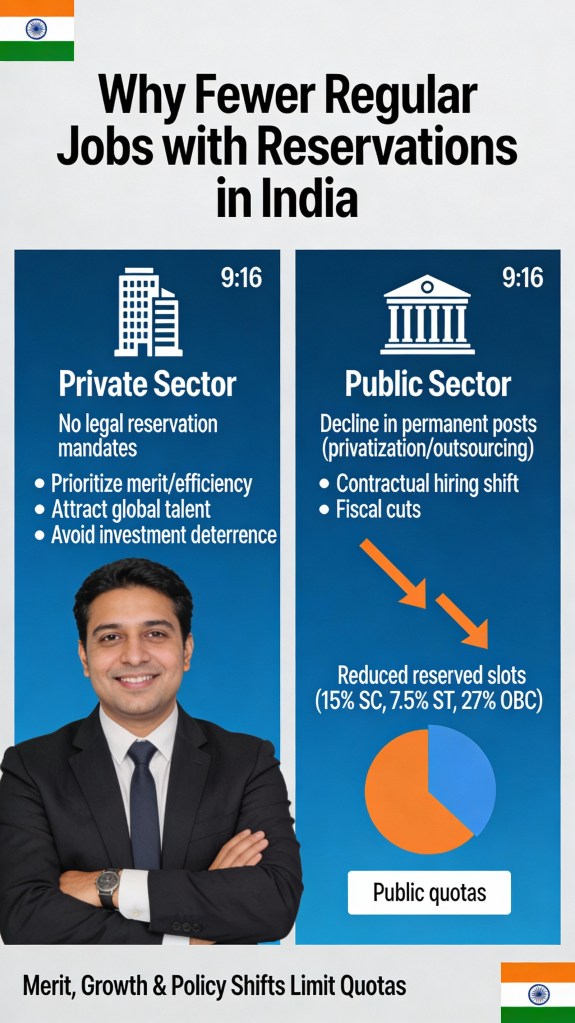
Regular jobs in both private and public sectors in India have limited or no reservation policies primarily to prioritize merit, efficiency, and economic growth over mandatory quotas. Public sector permanent positions enforce reservations (15% SC, 7.5% ST, 27% OBC), but their overall decline reduces available reserved slots.��
Private companies face no legal reservation mandates, as attempts like Karnataka’s local quota bill were halted due to industry opposition.��
Private Sector Private firms resist reservations to maintain hiring flexibility and attract top global talent, avoiding skill shortages or higher training costs.��
Mandates could deter investments and harm competitiveness, as seen in failed state bills in Haryana and Andhra Pradesh.��
Industry groups like CII oppose quotas, favoring voluntary reporting over enforcement.�
Public SectorPermanent government jobs have contracted sharply—from 2 crore in the 1990s to 1.7 crore by 2012—due to privatization, outsourcing, and fewer sanctioned posts.��
This shift to contractual roles dilutes reservations, as quotas apply mainly to regular hires, leaving over 9 lakh vacancies unfilled.�� Neoliberal policies prioritize fiscal cuts over expansion, indirectly limiting reserved opportunities.�

Leave a comment