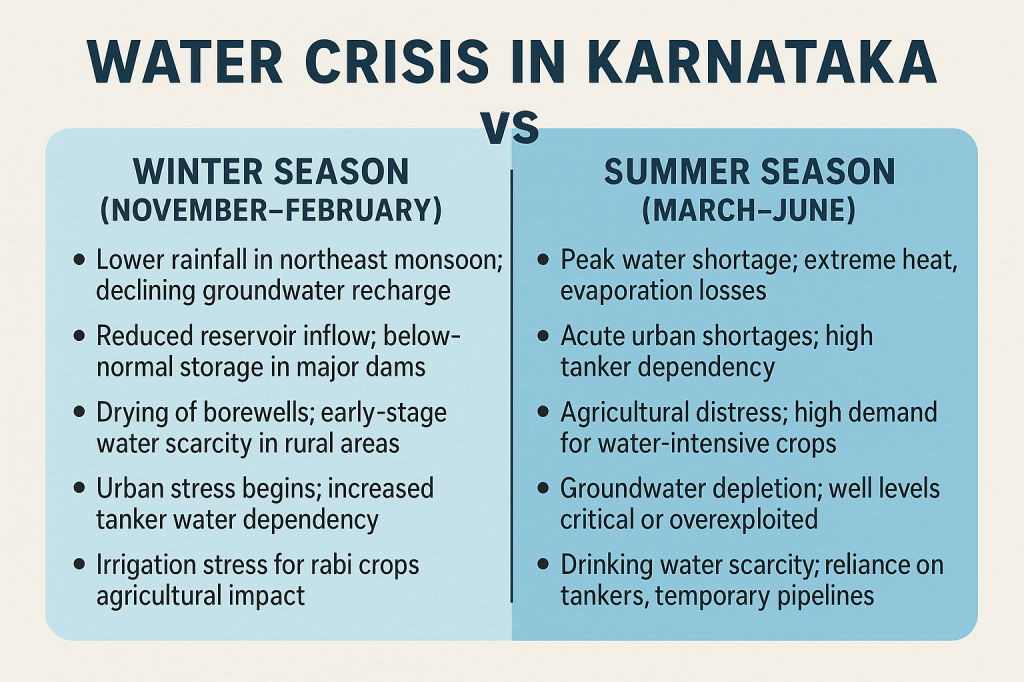
Here is a clear, concise summary of Karnataka’s water crisis during winter and summer:
Water Crisis in Karnataka – Winter vs. Summer
1. Winter Season (November–February)
- Lower rainfall in Northeast Monsoon: Karnataka receives very little rain in winter, especially in interior districts, leading to declining groundwater recharge.
- Reduced reservoir inflow: Major dams like KRS, Kabini, Tungabhadra, and Almatti often see below-normal storage during winter.
- Drying of borewells: Many rural areas—particularly in Kolar, Chikkaballapur, Tumakuru, and Vijayapura—experience early-stage water scarcity.
- Urban stress begins: Bengaluru and other cities see increased pressure on tanker water, especially in peripheral zones.
- Agricultural impact: Rabi crops (like millets, pulses) face irrigation stress, increasing dependence on groundwater.
2. Summer Season (March–June)
- Peak water shortage: Summer is the worst period, with extreme heat, evaporation losses, and almost zero rainfall.
- Acute urban shortages:
- Bengaluru faces tanker dependency, falling borewell levels, and reduced Cauvery supply.
- Coastal & Malnad districts face less crisis but see local shortages.
- Agricultural distress: Water-intensive crops (sugarcane, paddy, arecanut) cause high demand, worsening scarcity.
- Groundwater depletion: Borewells in districts like Kolar, Ballari, Raichur, Bagalkot, and Tumakuru hit critical or overexploited levels.
- Drinking water scarcity: Rural areas rely heavily on tankers and temporary pipelines from nearby rivers.
- Inter-state tension: Reduced river flow intensifies Cauvery and Krishna basin disputes.
Overall Summary
- Winter starts the drying phase with mild to moderate shortages.
- Summer brings severe scarcity due to heat, low rainfall, high demand, and overexploited groundwater.
- Urban areas (especially Bengaluru) and drought-prone districts face major stress every year.

Leave a comment