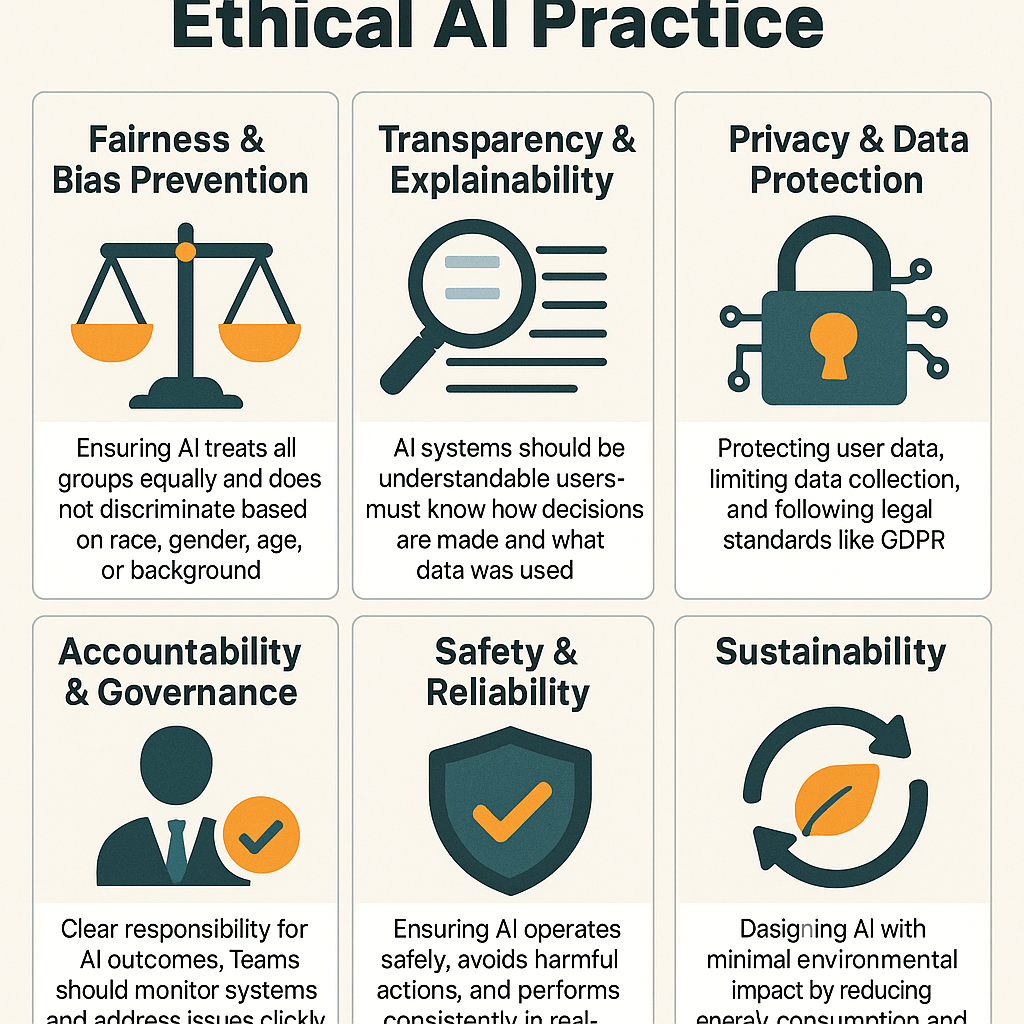
Here’s a clear, simple, and concise summary of Ethical AI Practice and its Types 👇—✅ Summary: Ethical AI Practice
Ethical AI Practice refers to designing, building, and deploying artificial intelligence systems in a responsible, fair, safe, and transparent manner.It ensures AI benefits people, avoids harm, respects privacy, and supports accountability in decision-making.Ethical AI focuses on preventing bias, protecting human rights, and making sure AI systems work reliably for society.—
✅ Types of Ethical AI Practice
1. Fairness & Bias Prevention
Ensuring AI treats all groups equally and does not discriminate based on race, gender, age, or background.
2. Transparency & Explainability
AI systems should be understandable — users must know how decisions are made and what data was used.
3. Privacy & Data Protection Protecting user data, limiting data collection, and following legal standards like GDPR.
4. Accountability & Governance Clear responsibility for AI outcomes.Teams should monitor systems and address issues quickly.
5. Safety & Reliability Ensuring AI operates safely, avoids harmful actions, and performs consistently in real-world scenarios.
6. Human-Centric Design. AI should support human values, enhance human decision-making, and avoid replacing essential human roles where harmful.
7. Sustainability Designing AI with minimal environmental impact by reducing energy consumption and responsible use of computing resources.—

Leave a comment