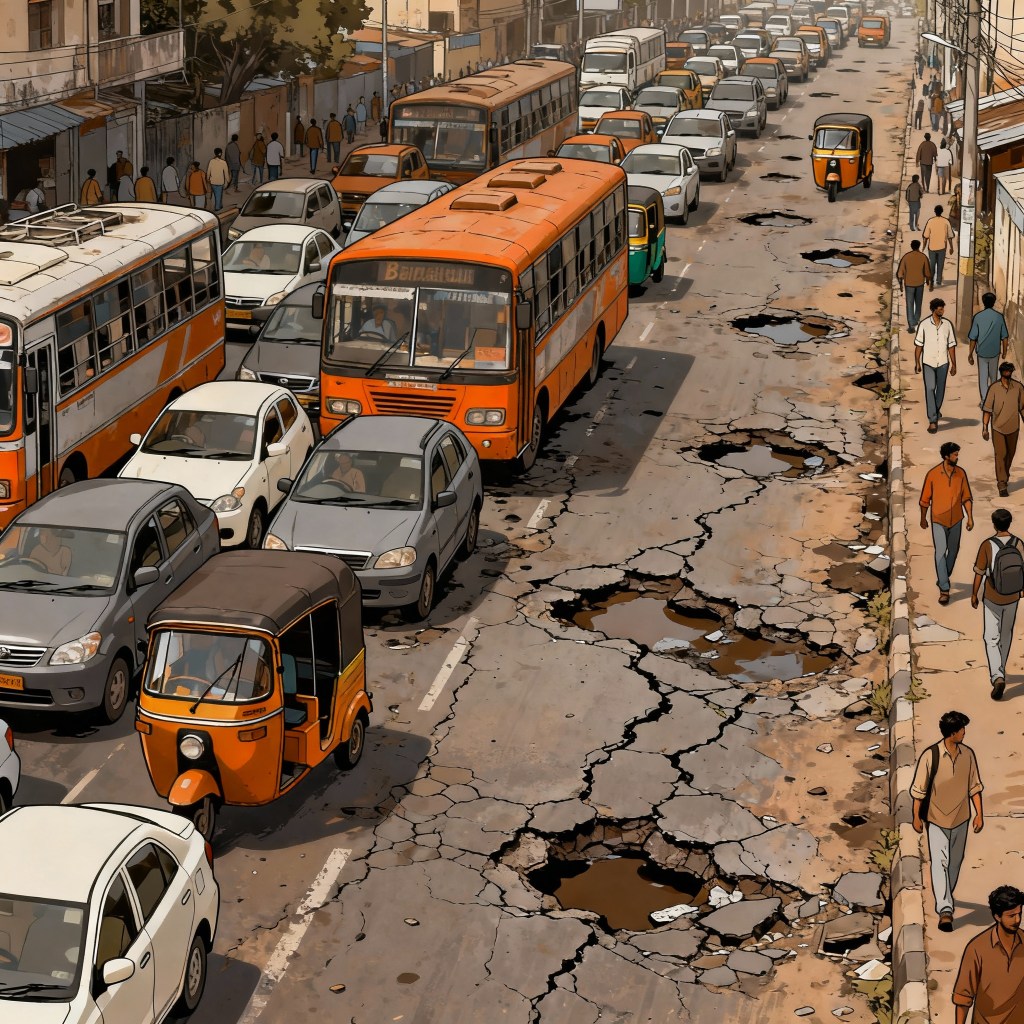
Bengaluru in Karnataka is widely regarded as having some of the worst infrastructure due to multiple interlinked reasons. The city faces severe traffic congestion, with roads plagued by potholes and poor maintenance that hinder smooth commute.
Rapid and unplanned urban expansion has turned Bengaluru into a concrete jungle, reducing natural water bodies by 70%, which contributes to both water shortages and flooding due to clogged drainage. Infrastructure projects like road repairs and metro expansions are often delayed by legal issues, land acquisition protests, and pandemic-related interruptions.
Basic amenities are lacking despite Bengaluru’s status as India’s tech capital, and the city’s public transport system is insufficient relative to the large number of private vehicles. The situation is worsened by a lack of long-term urban planning, poor coordination between municipal agencies, and political inertia that previously delayed infrastructure improvements.
These factors collectively erode business confidence and quality of life, prompting calls from industry leaders and civic activists to overhaul Bengaluru’s infrastructure governance and execution for the city to realize its full potential ������.

Leave a comment