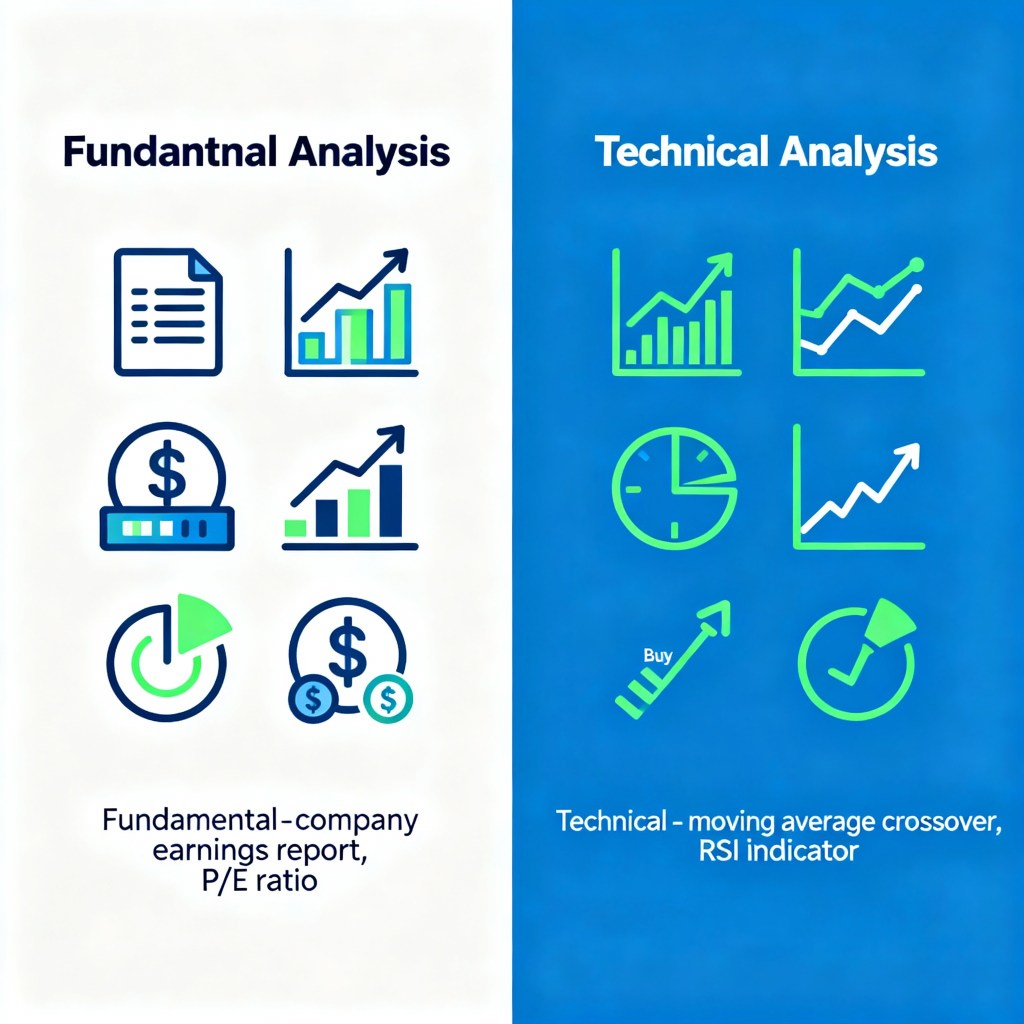
Fundamental analysis and technical analysis are two distinct approaches used in stock trading to evaluate and make decisions about investments.
Fundamental analysis focuses on assessing a company’s intrinsic value by examining its financial health, business model, industry conditions, and economic factors. For example, an investor analyzing a company’s quarterly earnings report, revenue growth, debt levels, and competitive advantage is doing fundamental analysis. This approach aims for long-term investment decisions by identifying undervalued stocks poised for growth.
Technical analysis, on the other hand, concentrates on analyzing historical price movements, trading volumes, and chart patterns to predict future price trends. For example, a trader using moving averages, relative strength index (RSI), and support-resistance levels to determine the best times to buy or sell a stock is engaging in technical analysis. This method is generally used for short-term trading or timing market entries and exits based on past market behavior.
In summary:
Fundamental analysis evaluates the company’s true worth through financial data and economic indicators for long-term investing.
Technical analysis relies on price and volume data patterns from charts to forecast short-term market movements.
Examples:Fundamental: Analyzing a company’s P/E ratio, earnings reports, or industry growth prospects.
Technical: Using chart patterns like head and shoulders, moving average crossovers, or volume spikes to time trades.Many investors combine both approaches—using fundamental analysis to select stocks and technical analysis to decide when to trade them ����.

Leave a comment