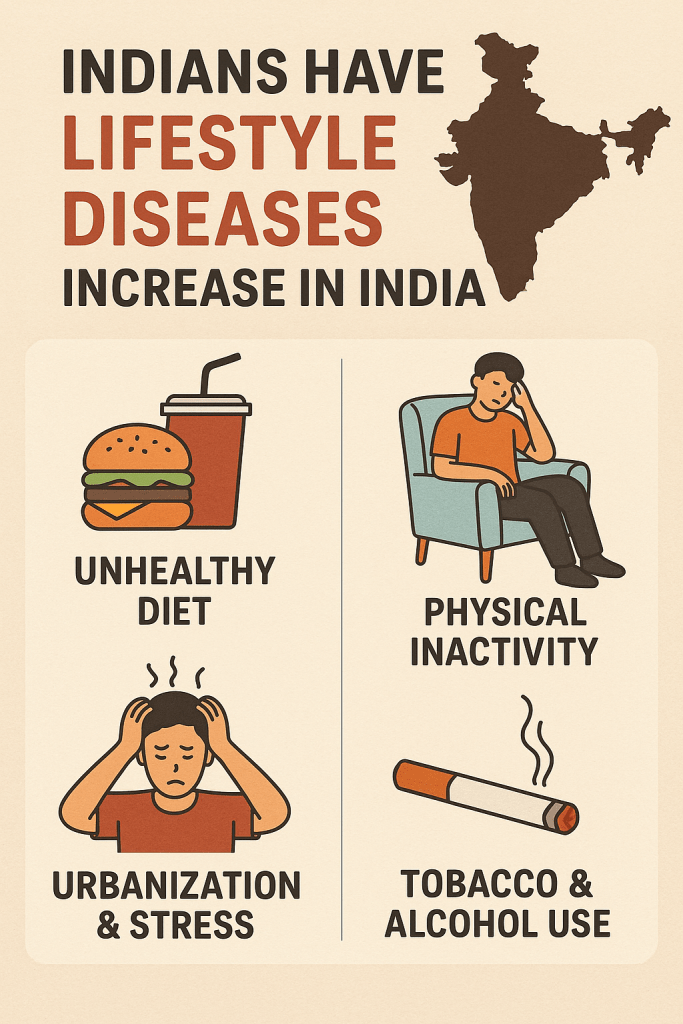
Lifestyle diseases in India have been increasing steadily over the past two decades, largely due to rapid urbanization, sedentary habits, and changing diets.
Here are the main reasons for the rise of lifestyle diseases in India:
1. Unhealthy Diet Shift from traditional, fiber-rich Indian diets to processed, fast foods high in sugar, salt, and unhealthy fats.Rising consumption of sugary drinks and packaged foods.
2. Physical Inactivity Sedentary jobs, reliance on vehicles, and reduced physical activity contribute to obesity, diabetes, and cardiovascular problems.
3. Urbanization & Stress Rapid urban growth leads to stressful lifestyles, long working hours, and less sleep.High stress is linked to hypertension, mental health issues, and heart disease.
4. Tobacco & Alcohol Use High rates of smoking, chewing tobacco, and increasing alcohol consumption fuel cancer, liver disease, and respiratory illnesses.
5. Environmental Factors Air pollution in Indian cities worsens asthma, COPD, and heart disease.Lack of clean air and water compounds health risks.
6. Genetic Predisposition South Asians, including Indians, are more genetically prone to type-2 diabetes and heart disease at younger ages.
7. Economic Growth & Lifestyle Changes
Rising incomes → higher consumption of unhealthy foods, gadgets, and sedentary leisure (TV, mobile use, gaming).
8. Healthcare Gaps Low awareness, late diagnosis, and inadequate preventive healthcare worsen the burden of diseases.
👉 As a result, India is witnessing a surge in diabetes, hypertension, obesity, cardiovascular disease, cancer, and mental health disorders — all categorized as lifestyle diseases.

Leave a comment