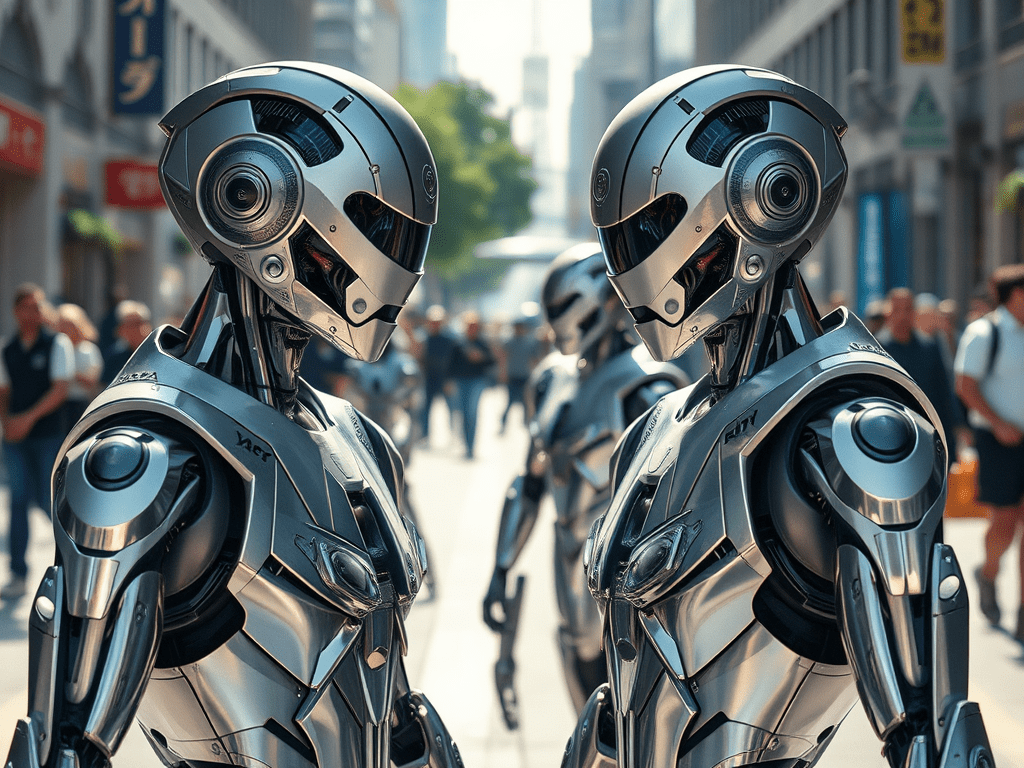
Humanoid robots are already present in the world, but they are not yet fully capable of replacing humans. Instead, they are being developed to assist, augment, and automate specific tasks.
Here’s the current situation:✅ Where humanoid robots are already working
Manufacturing & Warehouses – Robots like Tesla’s Optimus or Agility Robotics’ Digit are designed to move materials, assemble parts, or handle repetitive labor.
Customer Service – Robots like Pepper (SoftBank) are used in banks, airports, and stores to greet and assist customers.
Healthcare – Humanoid robots help in elder care, physical therapy, and as surgical assistants.
Hospitality – Hotels in Japan and China already use humanoid robots for check-in, room service, and cleaning.
Education & Companionship – Robots like NAO and Sophia are used in classrooms or as social companions.
⚠️ Limitations (why they can’t fully replace humans yet)High cost of production and maintenance
Limited intelligence compared to human adaptability
Energy and battery challenges
Ethical and safety concerns (job loss, privacy, autonomy)
Lack of creativity, empathy, and deep reasoning
🔮 Future Outlook
Experts believe humanoid robots will increasingly replace humans in dangerous, repetitive, or low-skill jobs (like mining, delivery, factory work), but not in fields needing complex judgment, emotions, or creativity—at least for now.

Leave a comment