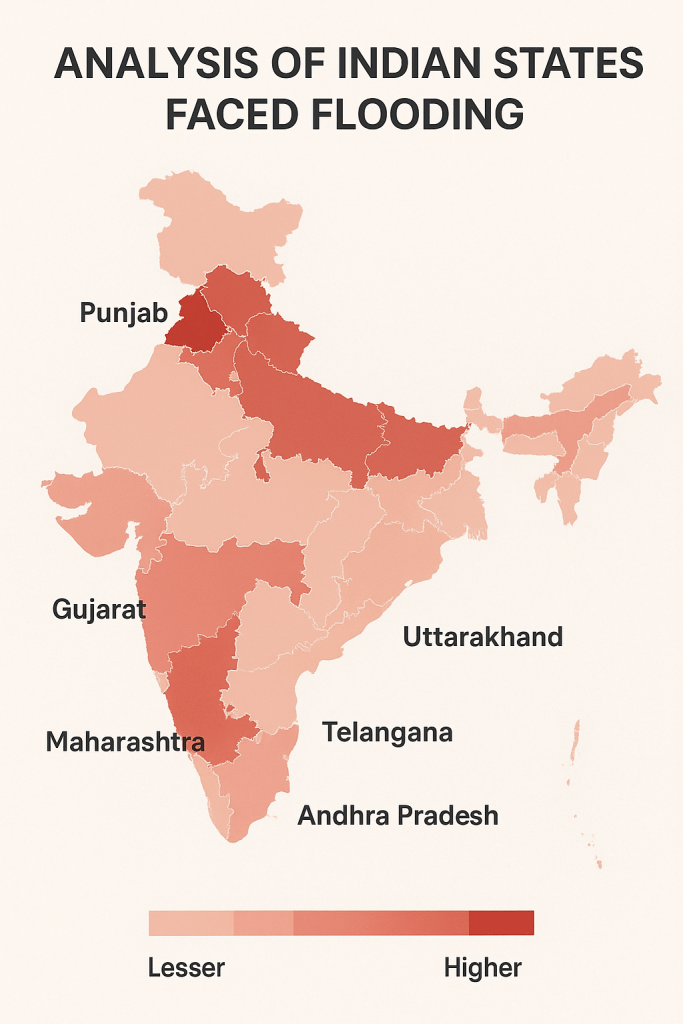
Many Indian states faced flooding due to a combination of extreme rainfall, river overflow, inadequate drainage, climate change, and unplanned urbanization, with pronounced effects during the 2025 monsoon season.
States Most Affected by Floods
Punjab, Haryana, Rajasthan: Northwestern states in the Indus basin face recurring floods from Himalayan snowmelt and monsoon rains, worsened by poor drainage infrastructure and encroachment on floodplains.
Uttar Pradesh, Bihar, West Bengal, Assam: The Ganga and Brahmaputra basins are among the world’s most flood-prone regions, suffering regular flooding due to heavy monsoon rains, high river discharge, and sediment deposition; districts in Bihar and Assam are especially vulnerable.
Coastal States (Odisha, West Bengal, Tamil Nadu, Gujarat, Andhra Pradesh): Coastal flooding occurs due to cyclones, storm surges, tidal floods, and urban runoff—Tamil Nadu (Chennai), Odisha, and Gujarat are frequently impacted.
Himalayan States (Uttarakhand, Sikkim, Arunachal Pradesh): Glacial lake outburst floods (GLOFs) and intense rainfall events cause sudden, destructive flooding in these regions.
Principal Causes of Recent Flooding
Extreme and Unseasonal Rainfall: Heavy monsoon rains, intensified by climate change, often exceed river banks and local drainage capabilities.
Urbanization and Infrastructure Failures: Unplanned development, loss of wetlands and water bodies, inadequate drainage and embankment maintenance contribute to urban and flash floods, particularly in cities like Mumbai, Chennai, Hyderabad, and Punjab’s agricultural districts.
Climate Change and Glacial Melt: Warmer temperatures have increased snow and glacier melt in the Himalayas, leading to higher river flows and greater frequency of flash floods even in previously low-risk zones.
Cyclones and Storm Surges: Cyclonic storms bring intense rainfall and high tides to coastal states, causing coastal and riverine flooding.Encroachment and Riverbed Silting: Human activities like construction on floodplains, tree felling, and silt deposition in rivers reduce water-carrying capacity and obstruct natural drainage.
Patterns and Trends
Monsoon Seasonality: About 75% of the country’s flooding happens during the June-September monsoon.
Changing Geography of Floods: New flash flood hotspots are emerging in semi-arid and central Indian regions previously considered safe, underscoring the influence of climate change and unregulated development.
Socioeconomic Impact: Floods devastate agriculture, infrastructure, and livelihoods, particularly in regions like Punjab, where major crops were lost and markets destabilized in 2025.
Summary Table: Flood-Prone Indian States and Core Causes
Flooding in India is driven by a mix of meteorological, geographical, and human-induced factors, with the risk amplified by climate change and expanding urban development.

Leave a comment