The debate around tunnel roads in Bangalore (Bengaluru) is less about climate change alone and more about a mix of environmental, geological, and infrastructure-related concerns. Here are the main reasons they are limited and controversial:
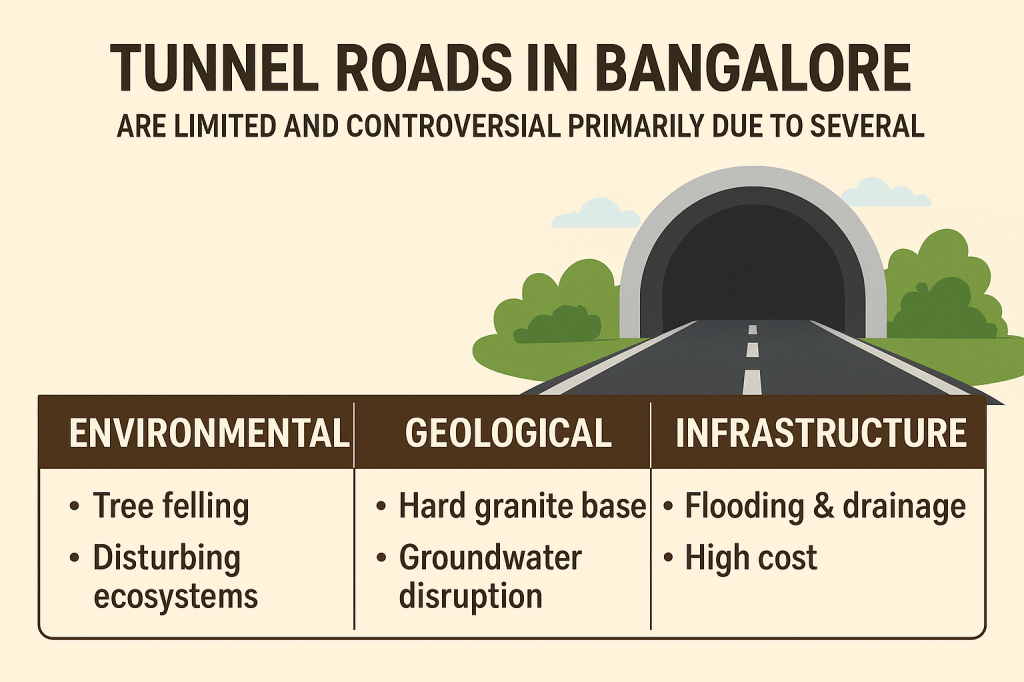
1. Geological Challenges Bangalore is built on a hard granite base, which makes tunneling far more expensive and technically difficult compared to softer terrains.Risk of groundwater disruption is high, since tunnels could interfere with aquifers and underground water flow, worsening the city’s existing water scarcity.
2. Environmental Concerns
Large-scale tunneling projects often require tree felling for entry/exit points, ventilation shafts, and approach roads.Risk of disturbing fragile ecosystems, especially around lakes and wetlands that are already under stress from urbanization.
3. Flooding & Drainage Issues
Bangalore faces frequent urban flooding due to poor stormwater drainage. Tunnel roads can worsen this risk by becoming water traps during heavy rains unless advanced (and costly) pumping systems are installed.
4. High Cost vs. Limited Benefit Tunnel construction costs are exponentially higher than elevated or surface roads.With Bangalore’s already congested urban sprawl, tunnels might only offer localized relief rather than a city-wide traffic solution.
5. Alternative Infrastructure
Priorities Many urban planners argue that investment should go into metro expansion, suburban rail, and better bus connectivity instead of costly tunnel roads.Prioritizing tunnels may divert funds from more sustainable, long-term public transport solutions.👉 So, while climate change (rainfall intensity, heat stress, etc.) does add risks, the core controversies are tied to geology, cost, flooding, and ecological impact.

Leave a comment