Here’s an analysis of how Indians remember and celebrate Independence Day, especially as a special national occasion:
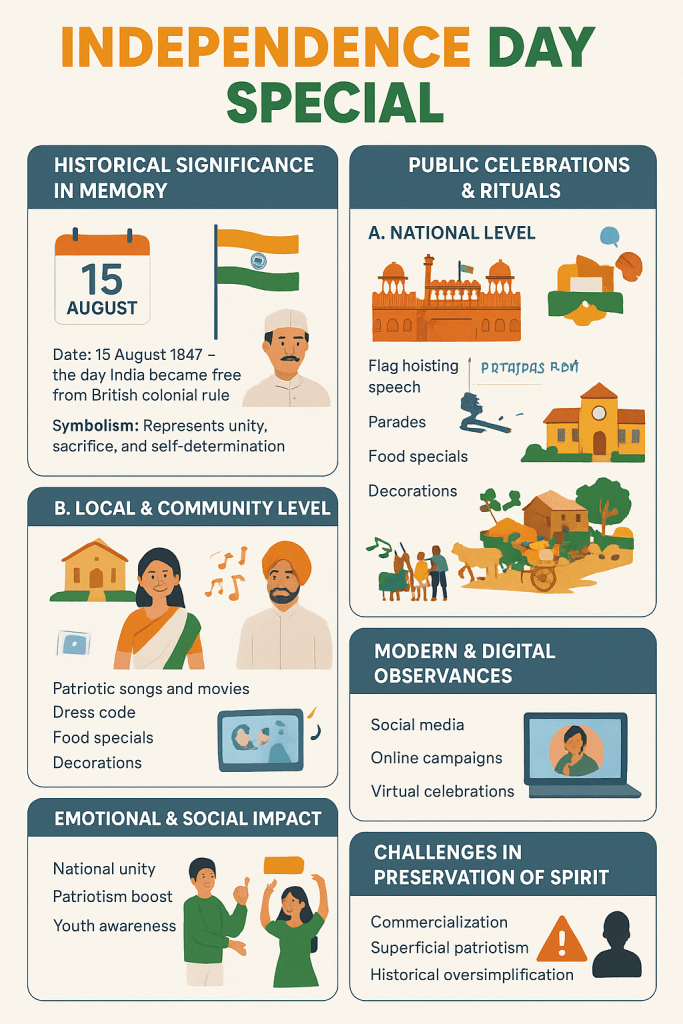
1. Historical Significance in Memory
- Date: 15 August 1947 – the day India became free from British colonial rule.
- Symbolism: Represents unity, sacrifice, and self-determination.
- Collective Memory:
- Stories of freedom fighters passed down through families.
- School lessons and media documentaries revive the struggle each year.
- Monuments like the Red Fort, Jallianwala Bagh, and Cellular Jail serve as physical reminders.
2. Public Celebrations & Rituals
A. National Level
- Flag Hoisting: Prime Minister hoists the tricolour at the Red Fort, followed by the national anthem and a 21-gun salute.
- Speech: National address highlighting past achievements and future vision.
- Parades: Showcasing cultural diversity, military strength, and technological progress.
B. Local & Community Level
- Schools & Colleges: Cultural programs, patriotic songs, skits on freedom struggle, essay competitions.
- Housing Societies & Workplaces: Flag hoisting, community breakfasts, games, and award ceremonies.
- Villages & Towns: Processions, folk performances, and traditional sports.
3. Cultural Expression
- Patriotic Songs & Movies: Broadcasts of classics like Maa Tujhe Salaam or Rang De Basanti.
- Dress Code: People wear saffron, white, and green outfits or badges.
- Food Specials: Restaurants offer tricolour-themed dishes; sweets like jalebi or laddoo are shared.
- Decorations: Streets, shops, and public buildings adorned with flags and lights.
4. Modern & Digital Observances
- Social Media: Posts of national flag emojis, reels with patriotic songs, and tribute videos.
- Online Campaigns: Brands and NGOs run Independence Day-themed awareness drives.
- Virtual Celebrations: During COVID and beyond, online flag hoisting, webinars, and cultural events became common.
5. Emotional & Social Impact
- National Unity: Cuts across caste, religion, and language divisions for a day of shared pride.
- Patriotism Boost: Revives interest in history and civic responsibility.
- Youth Awareness: Encourages younger generations to appreciate the sacrifices made for freedom.
6. Challenges in Preservation of Spirit
- Commercialization: Some fear the day is turning into a marketing gimmick.
- Superficial Patriotism: Symbolic gestures without deeper engagement in civic duties.
- Historical Oversimplification: Many know only a few famous freedom fighters, forgetting countless unsung heroes.

Leave a comment