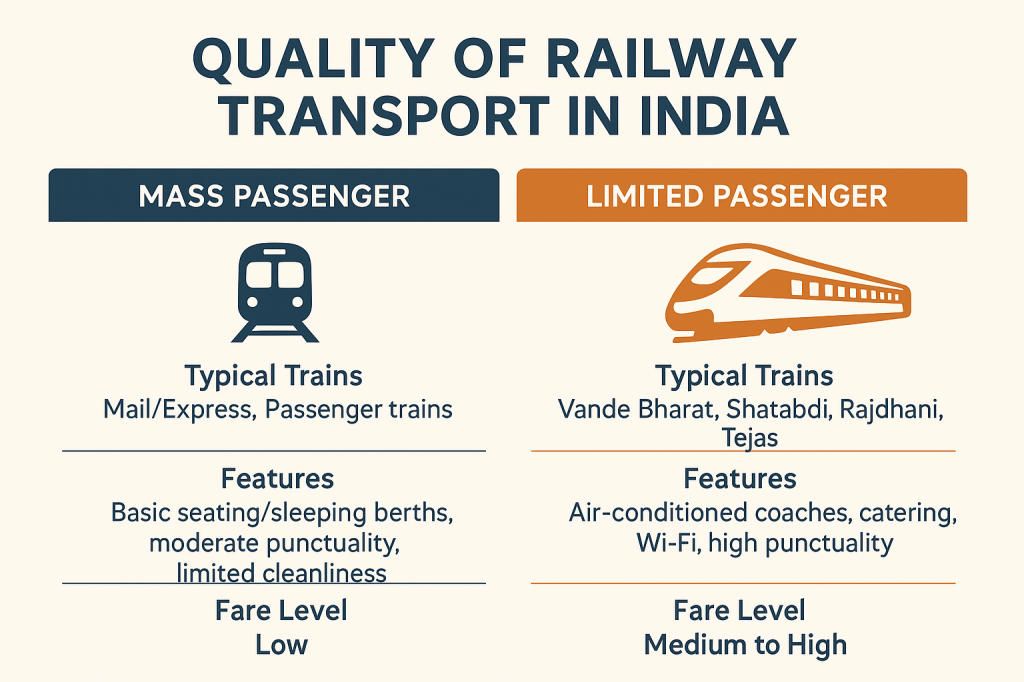
Here’s a detailed analysis of the quality of railway transport in India vs the limited passenger segment — covering infrastructure, service standards, and operational focus.
—1. Background Indian Railways is one of the world’s largest transport networks, carrying over 8 billion passengers annually. Most services cater to the mass population with affordable fares, but there is also a limited passenger segment — premium travelers who seek high comfort, speed, and convenience.
—2. Passenger SegmentationSegment Typical Trains Features Fare LevelMass Passenger Mail/Express, Passenger trains Basic seating/sleeping berths, moderate punctuality, limited cleanliness Low
Limited / Premium Passenger Vande Bharat, Shatabdi, Rajdhani, Tejas Air-conditioned coaches, catering, Wi-Fi, high punctuality Medium to High—
3. Quality ParametersParameter Mass Passenger Segment Limited Passenger SegmentPunctuality 70–80% (often delayed due to congestion) 90–95% (priority paths, less halts)Cleanliness Moderate; often impacted by crowding High; maintained during journeySpeed Avg. 40–55 km/h Avg. 80–110 km/hComfort Basic seating; crowding common Ergonomic seats, better air-conditioning Food Quality Varies; often average Standardized meals, better presentation Safety Crowding increases petty theft risk Higher security presence, CCTVBooking Ease Heavy demand; waitlists common Easier but still limited seats—
4. Core DifferencesInfrastructure Allocation – Premium trains get modern coaches, better maintenance, and priority on tracks.Operational Priorities – Timetables favor on-time running for premium trains, sometimes at the expense of slower trains.Experience Gap – The “travel experience” gap between the two segments is significant, leading to social perception that premium services are the “true modern face” of Indian Railways.—
5. Challenges Mass Segment: Chronic overcrowding, outdated coaches in some regions, maintenance delays, and long ticket waitlists.Limited Passenger Segment: Higher fares restrict accessibility, network coverage limited mainly to major cities.—
6. Strategic Balance Mass Transport Need: Majority of passengers rely on affordable travel, so investments here directly impact national mobility.Premium Segment Growth: Drives modernization, attracts tourists/business travelers, and showcases India’s high-speed aspirations.—
7. Key Insight India’s railway transport quality is dual-layered
:For the masses, the focus is on accessibility, affordability, and coverage.For the limited passengers, the focus shifts to speed, comfort, and service quality.Balancing both without creating a quality divide is the key challenge for Indian Railways.—

Leave a comment