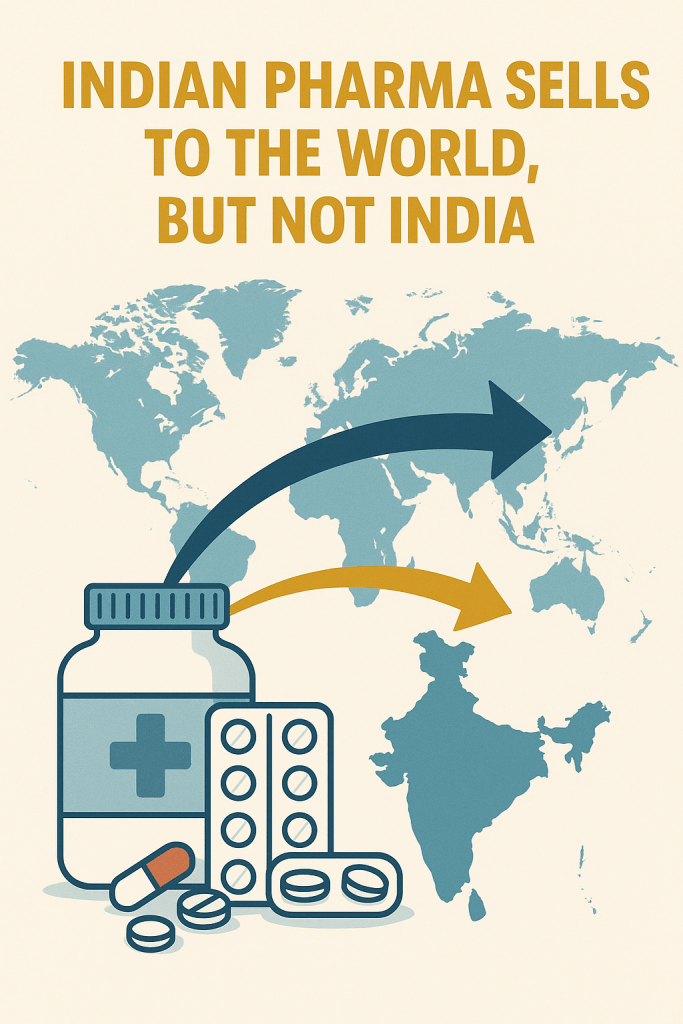
“Indian pharma sells to the world, but not India” – What it means:
1. Export-Oriented Focus:
- India is known as the “pharmacy of the world”, supplying 60% of global vaccine demand and 20% of global generic medicines.
- Major companies like Sun Pharma, Dr. Reddy’s, Cipla, and Lupin earn most of their revenue from exports to the US, EU, and Africa, where profit margins are higher.
2. Less Availability of Some Medicines in India:
- New drugs or innovative therapies may launch late or never in India due to:
- Low pricing regulations in India.
- Limited profit margins in the Indian market.
- Companies prioritize regulatory approval in wealthier countries.
3. Cost vs Access Paradox:
- Essential medicines made in India may be too expensive for poor patients or not stocked in rural hospitals.
- Even life-saving drugs for diseases like cancer, rare diseases, or advanced antibiotics are often unavailable or unaffordable for Indian patients.
4. Clinical Trials in India, but Benefits Go Abroad:
- Many global pharma companies test drugs on Indian patients through clinical trials.
- But once approved, those drugs are exported first or priced out of reach domestically.
Why This Happens:
- Global profits > local service
- Weak public health funding and low drug price ceilings in India discourage domestic focus.
- Inequity in healthcare infrastructure, especially in rural areas.
- Policy gaps in ensuring drug availability and distribution.
What Can Be Done:
- Stronger government procurement and subsidies for Indian-made drugs.
- Reform price control laws to balance affordability and pharma incentives.
- Encourage domestic R&D for diseases prevalent in India.
- Better rural healthcare delivery and medicine logistics.

Leave a comment