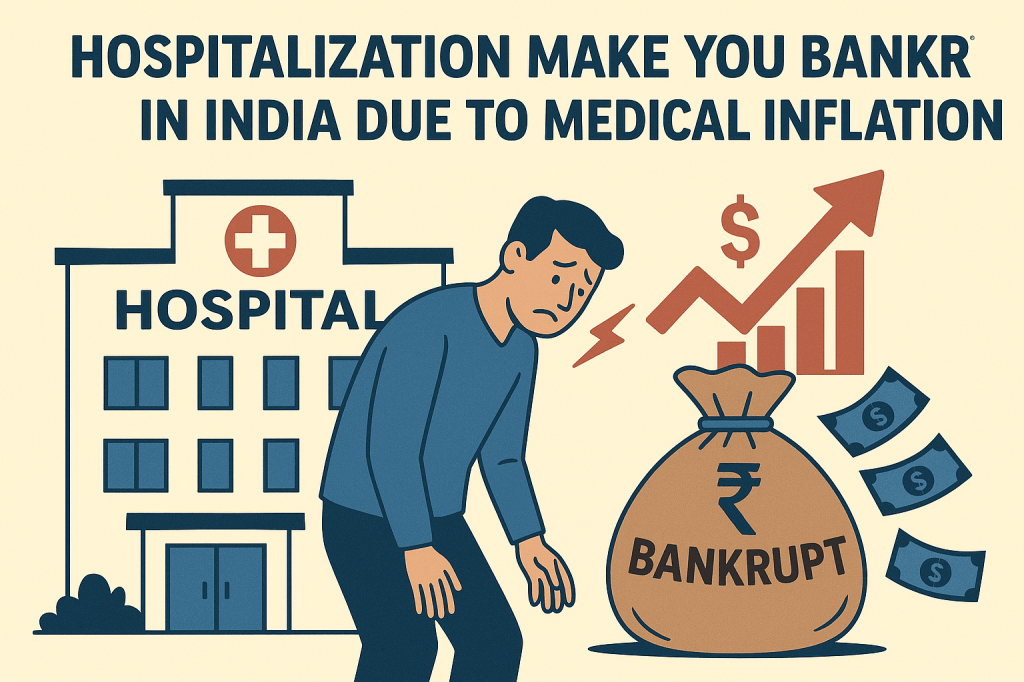
Hospitalization can make people bankrupt in India, especially due to medical inflation. Here’s how and why:—
🏥 Why Hospitalization Leads to Bankruptcy in India
1. Rising Medical Costs (Medical Inflation)Medical inflation in India is around 14–15% annually, higher than general inflation.Costs of surgeries, ICU stays, diagnostics, and medications have surged—especially in private hospitals.
2. Out-of-Pocket Expenditure Over 60% of healthcare spending in India is out-of-pocket.Most Indians still lack adequate health insurance or have low-coverage policies.A single hospitalization can cost ₹50,000 to ₹5 lakhs or more.
3. Lack of Universal Healthcare Public hospitals are overcrowded and under-resourced.Many turn to private hospitals for better care, which charge significantly more.
4. Health Insurance Gaps Many are either uninsured or underinsured.Even with insurance, hidden costs, claim rejections, or room rent limits lead to huge out-of-pocket payments.
5. Rural and Poor Households Hit HardestFor poor families, one hospitalization can push them below the poverty line.Many sell land, jewelry, or take high-interest loans to pay medical bills.—
📊 Example A middle-class family earning ₹30,000/month faces a ₹2 lakh hospital bill.With no insurance or poor coverage, they may borrow money, deplete savings, or enter long-term debt.—
🛡️ What Can Be Done?
Government schemes like Ayushman Bharat provide ₹5 lakh cover, but coverage gaps remain.Expanding insurance penetration and regulating private hospital pricing are essential.Preventive health and digital health services (e.g., telemedicine) can reduce hospitalization needs.

Leave a comment