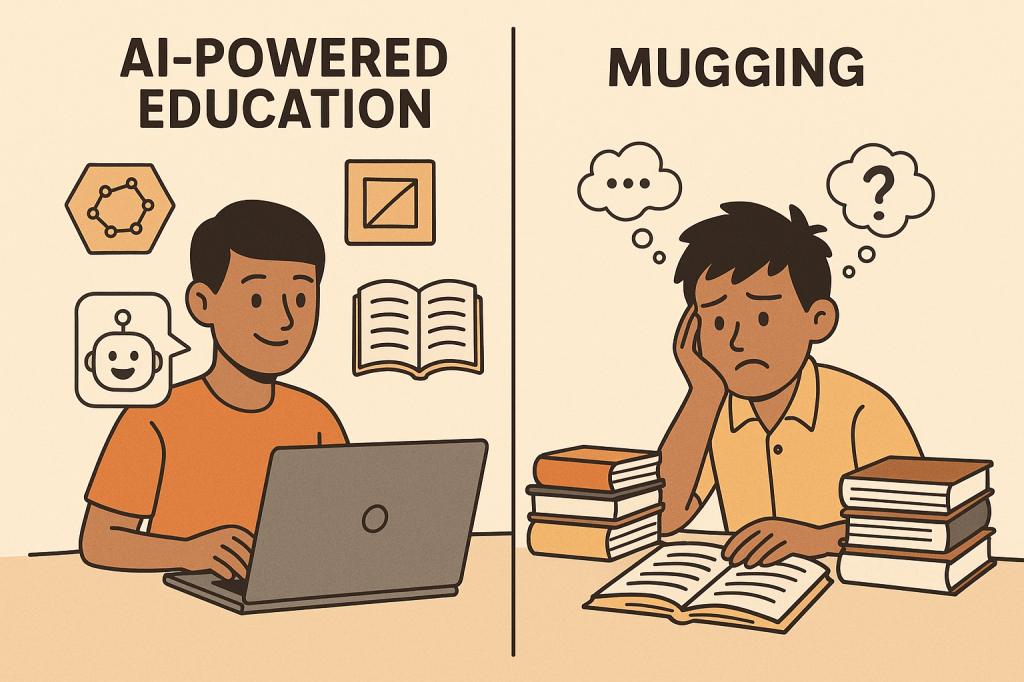
AI-powered education is widely perceived by students as making learning more accessible, engaging, and tailored to individual needs, but concerns linger about its potential to foster rote learning (“mugging”) if misused.
Student Perceptions: Why AI Education Feels “Easy and Understandable”
- Personalized Learning: AI adapts course materials and explanations to each student’s strengths, weaknesses, and pace. This individualization helps students grasp concepts more effectively and reduces the one-size-fits-all pressure of traditional education.
- Immediate Feedback and Support: AI platforms provide instant feedback on assignments and practice exercises; this real-time assistance helps students address their misunderstandings promptly, resulting in clearer, more accurate learning.
- Access on Demand: Students appreciate studying at their own convenience with 24/7 AI tutors, reducing the need to rely solely on scheduled class times or teacher availability.
- Increased Engagement: AI can gamify learning or use immersive tools like virtual reality, keeping students motivated and making complex topics more approachable and fun.
The “Mugging” Concern: Is AI Making Students Lazy or Less Thoughtful?
- Temptation to Copy or Use Shortcuts: Some students use AI tools to generate answers quickly rather than striving for deep understanding. This risk of “mindless copying” or mugging (rote learning without comprehension) is a significant concern among educators and students alike.
- Potential Loss of Critical Thinking: Overreliance on AI for assignments or problem-solving can lead to reduced critical thinking and analysis—students might skip the process of “thinking through” a problem, choosing convenience over mastery.
- Academic Integrity Issues: There’s apprehension about plagiarism, cheating, and the undermining of genuine effort if students use AI simply to complete tasks without engaging with the material.
Not Just About Answers—Maximizing AI’s Potential
- AI as a Learning Scaffold, Not a Crutch: Effective use of AI can help students explore concepts more deeply, as AI can explain challenging topics in multiple ways until the student “gets it.” Some teachers and researchers advocate for integrating AI as a tool for inquiry, discussion, and creativity, not just rote answers.
- Ethical and Responsible Usage: Students and educators increasingly recognize the need for guidelines and ethical standards, ensuring AI is used for building understanding, not just for shortcutting effort.
In summary: Students find AI-powered education easier and more understandable because it offers instant help, adapts to their needs, and is available anytime. However, when used only to generate answers without reflection, it can risk promoting mugging and reducing deep learning. The educational community is emphasizing responsible use, focusing on AI as a means for building understanding, critical thinking, and creativity.

Leave a comment