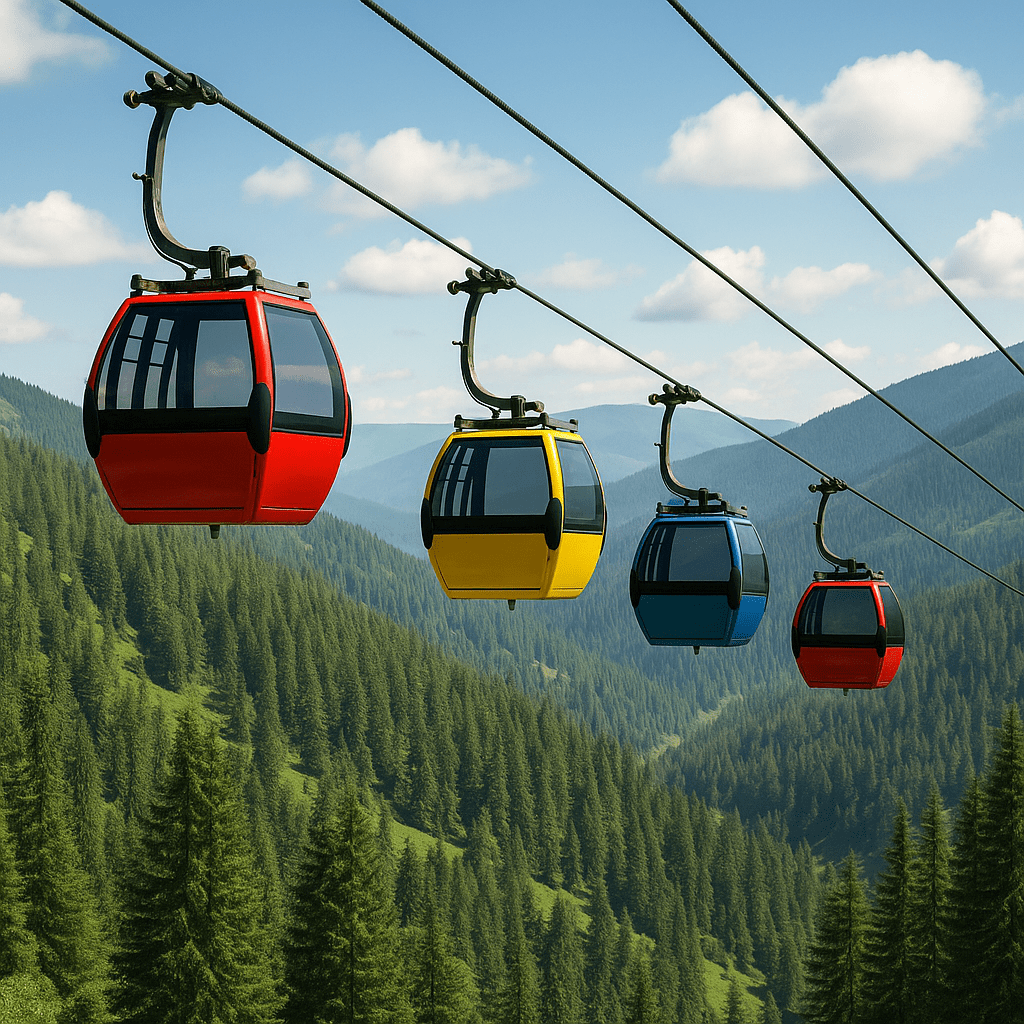
Ropeways (also known as cable cars or aerial tramways) are transportation systems where passenger or cargo cabins are suspended and moved using cables. They’re commonly used in hilly or mountainous regions and for short-distance urban transport. Here’s an overview:
🧩 Definition:
A ropeway is a form of aerial transportation in which carriers (cabins, gondolas, or chairs) are suspended from a moving cable that is strung between stations.
🚠 Types of Ropeways:
- Aerial Tramway – Two large cabins shuttle back and forth.
- Gondola Lift – Small cabins continuously circulate.
- Chairlift – Open chairs for skiers or tourists.
- Material Ropeway – For transporting goods or materials in industries or remote areas.
📍 Uses:
- Tourism (e.g., Gulmarg, Auli in India)
- Urban Transport (e.g., Bolivia’s La Paz cable car)
- Access to Hill Stations or religious sites
- Industrial transport in mining or forest areas
✅ Advantages:
- Environment-friendly (no fossil fuel on-site)
- Avoids traffic congestion
- Useful in difficult terrain
- Low land requirement
❌ Disadvantages:
- High initial cost
- Weather-dependent (affected by wind, rain, lightning)
- Limited capacity compared to metro or buses
- Requires regular maintenance
🌍 Ropeways in India:
Some popular and developing ropeway systems include:
- Vaishno Devi Ropeway (Jammu)
- Girnar Ropeway (Gujarat – Asia’s longest ropeway)
- Varanasi Ropeway (Urban transport pilot project)
- Darjeeling Ropeway (West Bengal – tourism)

Leave a comment