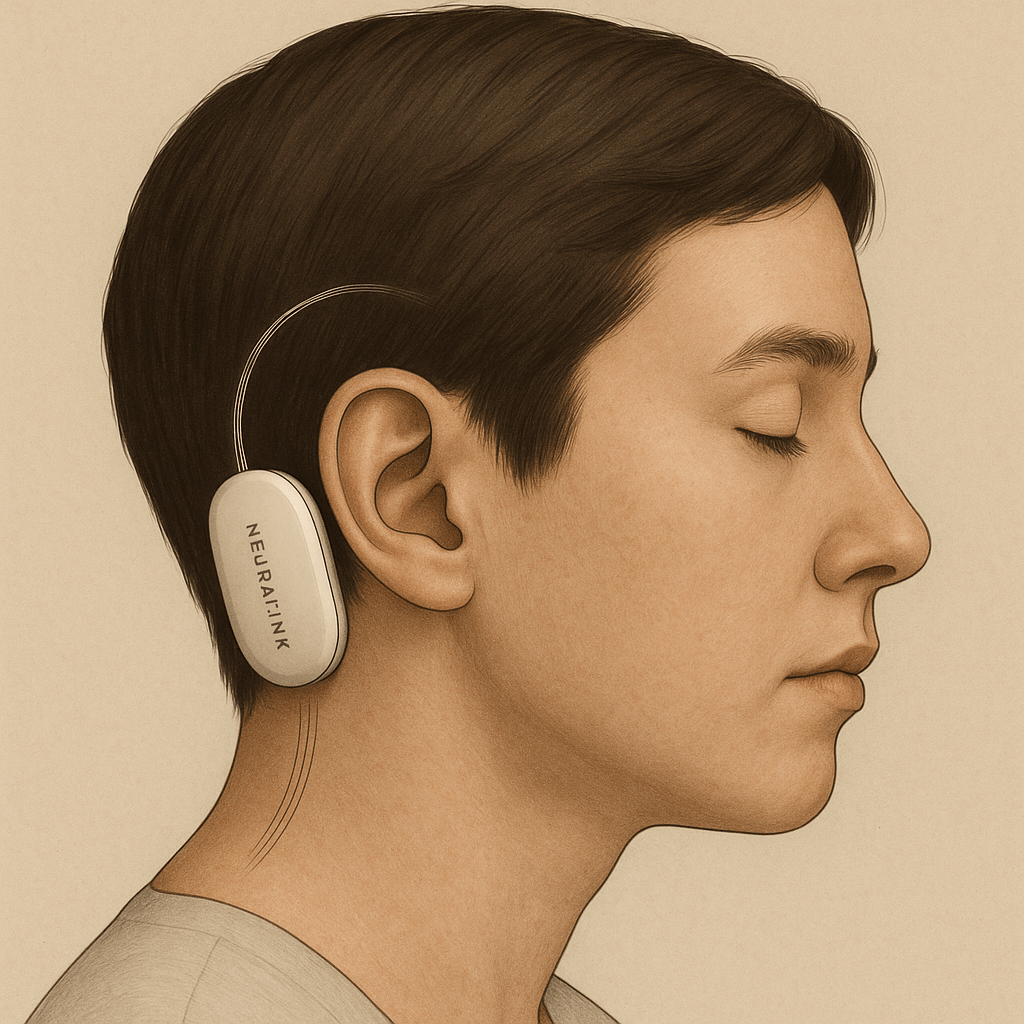
Here’s what current public information reveals about Neuralink’s future potential to restore hearing for deaf individuals—including those born deaf:—
🧠 What Neuralink Aims to Achieve
Elon Musk has stated there is a “clear path to restoring hearing with Neuralink, even for someone who has had total loss of hearing since birth,” explaining that the implant could directly stimulate neurons in the auditory cortex. Unlike existing cochlear implants that stimulate the auditory nerve, Neuralink’s approach would bypass the damaged ear structures and interface directly with sound‑processing regions of the brain. —
✅ Progress So Far Neuralink has received FDA “Breakthrough Device” designation for its Link implant focused on speech restoration for people with neurological impairments such as ALS and spinal cord injuries. As of mid‑2025, three individuals have received implants (two with paralysis, one with speech impairment) and are reportedly doing well. The company plans to treat 20–30 more patients by year‑end. —
🎯 Applying to the Deaf Community: Promise & Uncertainty Technical Potential:Could potentially benefit people with sensorineural hearing loss or auditory nerve damage where conventional implants may not work. With thousands of electrodes (~3,072 planned) Neuralink might offer higher-fidelity sound perception, potentially improving speech comprehension or even music perception.
Key Challenges:
1. Invasive surgery: Direct brain implantation carries risk of bleeding, infection, electrode migration. Safety over long-term remains unknown.
2. Complex auditory processing: Sound perception is distributed across many brain regions—decoding these reliably is nontrivial.
3. Ethical and cultural concerns: Deaf culture sees sign language as core to identity.
Some in the deaf community have voiced that they should have agency in whether and how such devices are developed or deployed. —
👥 Voices from the Deaf Community On Reddit, a Deaf user expressed concern that Neuralink might undermine Deaf identity:>
“What’s the point of Neuralink making a Deaf person into hearing person when spoken language will be eliminated?” On social media, community members called for meaningful inclusion of Deaf adults in design and decision-making:>
“Please meet with Deaf adults before moving forward. We deserve a say.” —
📋 Timeline & OutlookArea
Status Hearing restoration trials Not yet started—no specific clinical trial for auditory use announced.
Regulatory designation
↳ Link for speech and Blindsight for vision have FDA “Breakthrough” status. Testing with deaf individuals No public reports yet. Musk’s statements remain speculative.Expected availability Early trials likely in late 2025 or beyond—but broader rollout could take several years depending on results.—
🤔 Final Thoughts Neuralink may offer a transformative avenue for restoring hearing by directly stimulating the brain, potentially benefiting those unable to use cochlear implants. However, such an approach is still at an early experimental stage, with no completed trials in deaf individuals specifically, and serious ethical and safety considerations remain.If you’re interested in exploring current alternative technologies, such as cochlear implants, auditory brainstem implants (ABI), or AI-based assistants for the Deaf (e.g., sound-recognition apps),

Leave a comment