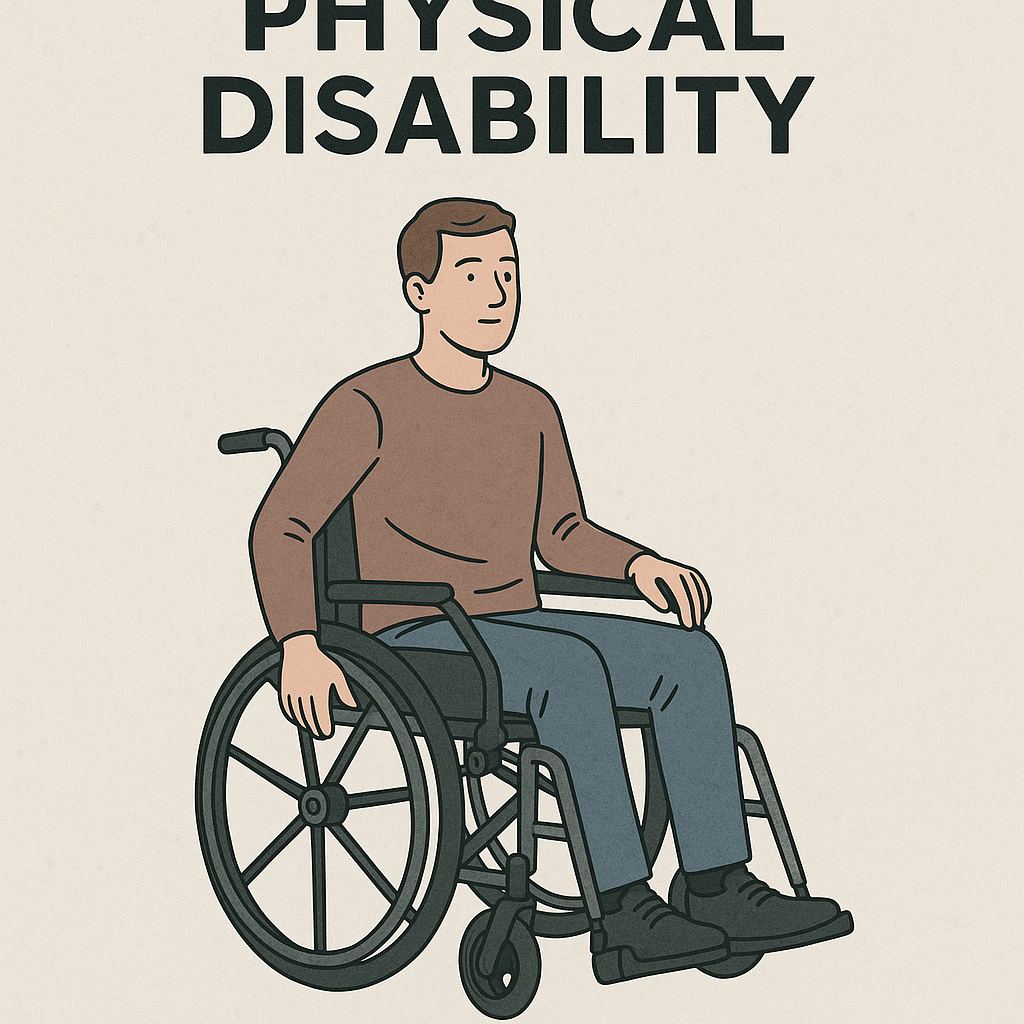
Physical disability refers to a condition that limits a person’s physical functioning, mobility, dexterity, or stamina. It can be caused by congenital (from birth), acquired (due to accident or illness), or degenerative conditions.
Key Characteristics:
- Affects movement or physical capacity.
- May involve the musculoskeletal system (bones, joints, muscles) or the nervous system (brain, spinal cord, nerves).
- Can be temporary or permanent, partial or total.
Examples:
- Paralysis (e.g., paraplegia, quadriplegia)
- Amputation or limb loss
- Muscular dystrophy
- Cerebral palsy
- Spina bifida
- Chronic arthritis
Impact:
Physical disabilities can affect:
- Walking or movement
- Balance and coordination
- Fine motor skills (e.g., writing, gripping)
- Independence in daily activities
Supportive tools like wheelchairs, prosthetics, walkers, and mobility aids help individuals with physical disabilities lead independent lives.

Leave a comment