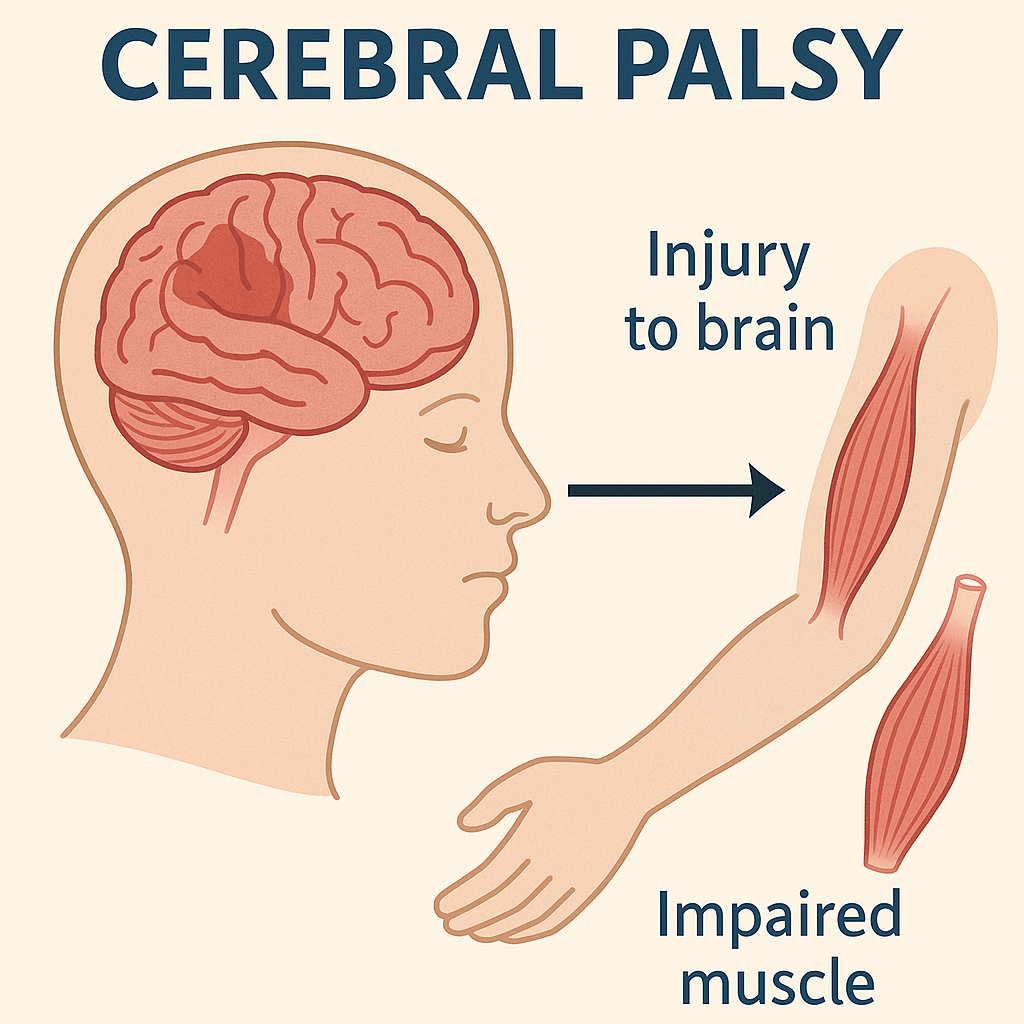
Cerebral palsy (CP) is a group of neurological disorders that affect a person’s ability to move, maintain posture, and balance. It is caused by abnormal brain development or damage to the developing brain, usually before, during, or shortly after birth.
Key features:Movement and coordination issues (e.g., stiff muscles, uncontrolled movements) Muscle tone abnormalities (too stiff or too floppy) Delayed development (e.g., sitting, crawling, walking)
Non-progressive: The brain damage does not worsen over time, but symptoms may change as the child grows.
Other possible challenges: Speech difficulties, intellectual disabilities, vision/hearing problems, seizures.Cerebral palsy varies in severity and can affect one limb, one side of the body, or the entire body.
Early diagnosis and supportive therapies (physical, occupational, speech) can improve function and quality of life.

Leave a comment